Finding art opportunities that do not charge submission fees is a great way to advance your career while maintaining financial sustainability.
Because calls for entry change rapidly, it is important to bookmark the websites below, as they are the primary hubs for no-fee listings.
Recurring opportunities for 2026–2027 that prioritise accessibility:
1. The "Golden" Databases (Always Filter by "No Fee")
These platforms allow you to filter results by "No Fee" or "Free to Apply." Make these your bookmarks:
CallForEntry.org (CaFÉ): Set the "Entry Fee" filter to "Free" only. This is the most popular site for public art commissions and municipal grants.
PublicArtist.org: Highly focused on public art, percent-for-art programs, and government-funded commissions. Most of these do not charge submission fees.
ResArtis: The global database for artist residencies. Use their advanced search to filter by "No Fee" residencies.
Rhizome: Excellent for digital/new media art opportunities, many of which are grant-funded and free to apply.
2. Prestigious Programs with No Submission Fees (Recurring)
These programs are highly respected, fully funded, and consistently have no application fees. Mark your calendars for their annual cycles:
Creative Capital Award: One of the most significant grants for individual artists in the U.S. They have removed all application fees to ensure equity.
Timing: Typically opens in early 2026 for the 2027 cycle.
The Foundation for Contemporary Arts (FCA) Emergency Grants: If you are an artist with an unforeseen opportunity or emergency, they accept applications year-round with no fee.
The Guggenheim Fellowship: The gold standard for mid-career artists. The application is rigorous but 100% free.
Timing: Applications usually open in late summer/fall annually.
MacDowell Fellowship: One of the most prestigious residencies in the U.S. They offer travel grants and provide all meals/housing for free.
Timing: Biannual deadlines, always free to apply.
United States Artists (USA) Fellowships: These are unsolicited nominations, but they occasionally open cycles for specific disciplines. Keep an eye on their portal.
3. Regional and Discipline-Specific Grants
If you reside in the U.S., your local state arts council is your best source for free funding:
State Arts Councils: Search "[Your State] State Arts Council" (e.g., NYSCA, Creative West, etc.). State-funded grants never charge an application fee. They often have individual artist grants available on a 2-year revolving cycle.
Foundation Directory Online (Candid): Many libraries provide free access to this database. It allows you to search for private foundations that provide grants to artists, which almost never charge a fee to apply.
4. Tips for Securing No-Fee Opportunities
Check the "Submission Fee" Policy: If you see a call that looks prestigious but has a fee, check if they offer "Fee Waivers." Many organizations (like the Jerome Foundation or Pollock-Krasner) will waive fees for artists experiencing financial hardship if you simply email the registrar.
Beware of Scams: If an opportunity asks for a "processing fee" or "shipping fee" to be paid by the artist after being selected for an exhibition, it is a scam. Legitimate grants and residency programs cover their own costs.
Newsletter Subscriptions: To stay updated for 2026/2027, subscribe to Artwork Archive’s Blog or the NYFA (New York Foundation for the Arts) Source. NYFA is the most comprehensive free database in the country, regardless of where you live.
Tip for 2027
Start preparing your "Artist Packet" now. Most grants require a Project Description, Artist Statement, Bio, and a high-quality Work Sample Portfolio. Having these ready in a Google Drive folder will allow you to apply the moment a "No Fee" call is announced, as many free calls have shorter submission windows.
Resources for Artists [part 2]
Create Free Ads!
Create Adverts for your business with Art gratis images - It's free! Just grab some images, add text, logos etc. in your favourite editor and share on your social pages.
Check out these samples below.







Contemporary Interiors
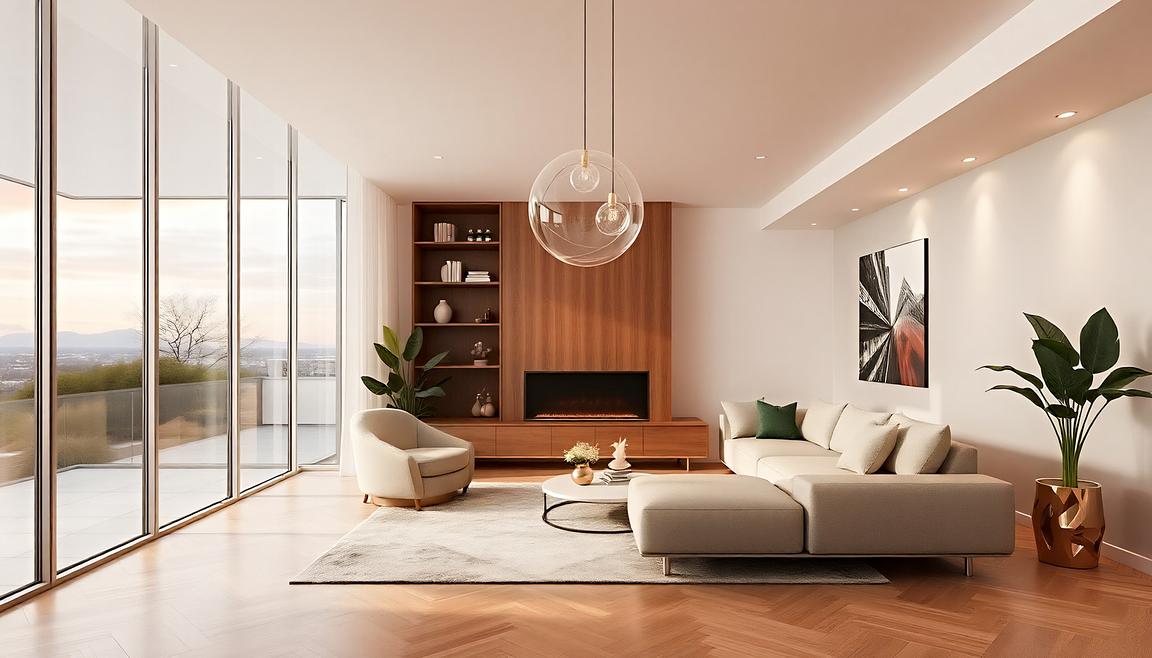
How to create beautiful contemporary interiors.
The allure of contemporary design is simple: it offers a calming, sophisticated counterbalance to the chaos of modern life. Fresh, crisp and timeless, it's an aesthetic defined by clean lines, negative space, and a refined focus on form and function.
Despite the appearance of simplicity, achieving a beautiful contemporary interior can be tricky. It requires restraint, an appreciation for texture, and a commitment to quality over quantity.
If you’re ready to evolve your home, office, store, garage or whatever, from cluttered and busy to polished and timeless, here are a few pointers. But first, what exactly does 'contemporary' mean?
Defining Contemporary:
It’s Not Just "modern" - While the terms are often used interchangeably, modern refers specifically to the design movement of the early to mid-20th century (think Bauhaus and Mid-Century Modern).
Contemporary, on the other hand, is fluid. It means "of the moment." A contemporary design incorporates current styles, textures, and technological innovations, resulting in a look that feels perpetually fresh, comfortable, and sophisticated.
The goal is an interior that is architectural, intentional, and serene.
1. Establish the Neutral Foundation.
Contemporary design starts with a tranquil, grounded color palette. Unlike maximalist styles, color is used judiciously, often appearing in accents rather than dominating the space.
The Power of Neutrals
Your walls and large anchor pieces (like sofas or cabinets) should stick primarily to neutrals.
Warm neutrals like cream, taupe, stone grey, and pale wood tones keep the space light and inviting.
For high contrast use black, charcoal, or dark navy to ground the room. Black window frames, dark lighting fixtures, or a statement black coffee table are essential for providing visual weight and definition to the clean lines.
The 80/20 rule: Dedicate 80% of your color scheme to neutrals and only 20% to deep, saturated accent colors (such as emerald green, burnt orange, or sapphire blue).
2. Embrace the Clean Line and Form
Contemporary furniture is sculptural. It views every piece—from a standing lamp to a dining chair as a piece of functional art.
Speaking of Art
The artworks on display in any contemporary space will often determine the wow factor, but paintings, photographs or sculptural pieces speak of you and your personality on a more intimate level .Of course you don't want the art to conflict with the interiors, but it should never be purchased to fit in with them - Art is not about colour matching and it's worth noting that in some of the most spectacular interior spaces, the artworks will very often, not just punctuate the space effectively, but take up most of the budget too.
Thankfully, Art Gratis images are free! so you can splash out on quality frames. We recommend simple minimalist box frames (black, grey or white - all with a white border) or better still, go unframed and print our images on matte finish aluminum dibond for that professional gallery look.
Furniture Focus
When selecting furniture, prioritize pieces defined by strict geometry and clean edges.
Avoid the Frills: Steer clear of skirts, fussy legs (like cabriole or claw feet), ornate carving, and excessive padding.
The Sofa: Choose a sofa with low, substantial arms, sharp corners, and perhaps thin metal legs that lift it slightly off the floor. Modular or sectional sofas are a perfect fit for their customized geometry.
Dining Tables: Look for sleek materials like glass, metal, or raw wood, supported by clean, architectural pedestals or straight legs.
Negative Space is Key: Furniture placement should allow walls and floors to breathe. Don't push everything up against the perimeter; allow pieces to float in the center of the room to define zones.
3. Texture is the New Pattern
Because contemporary style relies heavily on muted colors and minimal ornamentation, texture is the critical element that prevents the space from feeling cold or sterile. Texture provides depth and visual interest without introducing clutter.
Layering Raw Materials: Introduce layers of tactile materials that feel natural and luxurious.
Textiles: Think chunky linen, soft velvet, nubby boucle, or thick wool rugs. Use these materials generously in throw pillows, blankets, and upholstery.
Hard Materials: Mix metals (matte black, polished chrome, brushed bronze) within the same space. Introduce natural elements like unpolished stone, smooth concrete, and raw, light-colored wood (like white oak).
Rugs: Select area rugs that define the seating area. Jute, sisal, or low-pile abstract rugs work beautifully, emphasizing texture over complex patterns.
4. Master the Art of Intentional Lighting
In contemporary design, lighting fixtures are not just practical necessities—they are architectural accents. They provide both ambient light and focal points.
Treat Light Fixtures as Sculpture
The Statement Piece: Invest in a large, sculptural pendant light or chandelier, ideally one suspended over a dining table, kitchen island, or living room zone. Look for geometric shapes, linear designs, or industrial materials.
Ambient Layers: Use recessed lighting (pot lights) to provide general illumination without visual clutter. Supplement this with floor lamps and table lamps that feature clean, simple lines and metallic finishes.
Avoid Clutter: While modern design loves task lighting, ensure all cords are hidden and lampshades are simple (usually cylindrical or square).
5. Curate Accessories (Quality Over Quantity)
The biggest pitfall in contemporary design is over-accessorizing. Contemporary spaces require a strict editing process. Every item must earn its place.
The Rule of One Impact
nstead of scattering numerous small objects, opt for one or two highly curated, impactful pieces.
Artwork: Go big. A single, oversized piece of abstract art or striking black-and-white photography works better than a busy gallery wall. The piece should feature colors that complement your 20% accent palette.
Bookshelves: If you have built-in shelving, don't fill every shelf with books. Mix in intentional "white space." Style shelves with a few large, meaningful objects—a heavy ceramic vase, a small stack of beautiful coffee table books, or a piece of natural stone.
Declutter Ruthlessly: Storage is paramount. Baskets, built-in cabinetry, and integrated storage solutions must keep everyday items hidden, preserving the clean, uncluttered nature of the design.
Your Contemporary Checklist
Ready to start the transformation? Focus on these three immediate actionable steps:
Declutter & Store: Remove everything from your countertops and surfaces. Find storage for items that don't serve a specific decorative or practical purpose.
Define the Palette: Select your main wall color (a warm neutral like greige) and identify where you will incorporate high-contrast black elements.
Invest in Lines: Replace one "busy" piece of furniture (like an ornate side table) with a simple, geometrically strict alternative (like a cube or minimal metal table).
Creating a beautiful contemporary interior is not about being cold or severe; it’s about choosing sophistication. When you prioritize clean lines, natural textures, and intentionality, you achieve a space that is effortlessly stylish, calm, and timeless.
Modern Art
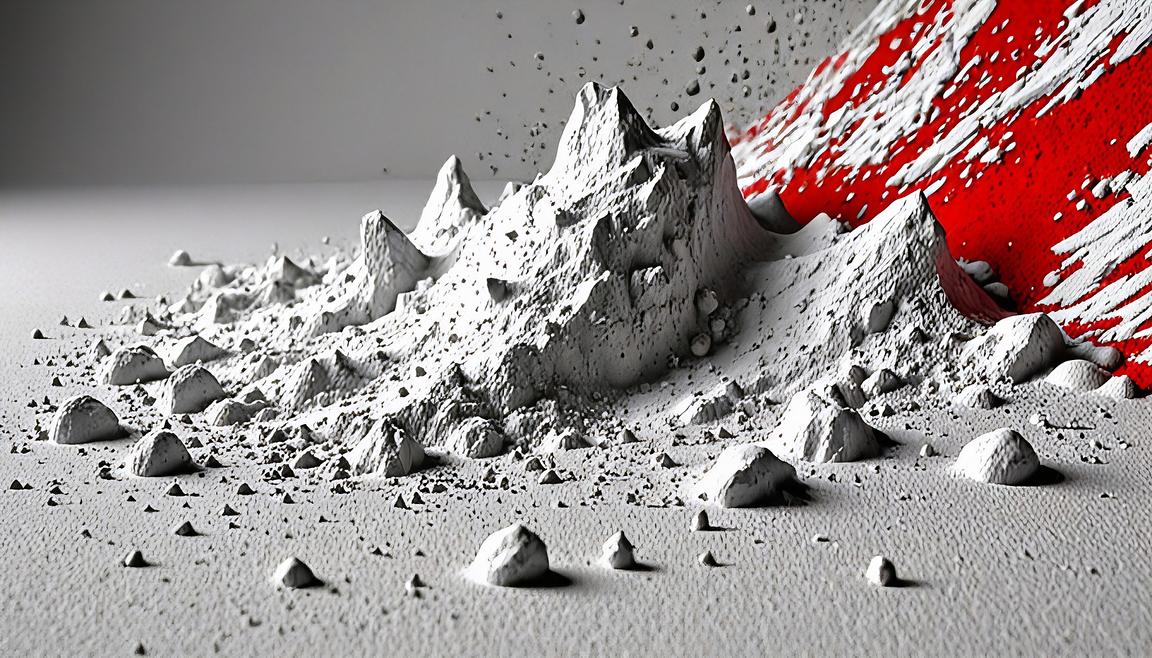
Acclaimed Contemporary Visual Artists
Art has always been a mirror to society, a canvas for our dreams, fears, and evolving understanding of the world. While we often look to the masters of the past, there are extraordinary individuals working right now, pushing boundaries, sparking dialogue, and fundamentally shaping the landscape of contemporary visual art.
These living legends, with their diverse mediums and powerful messages, remind us that art is a vibrant, ever-evolving conversation. From breathtaking installations to poignant photography, monumental sculptures to politically charged performances, their work continues to captivate, challenge, and inspire.
Join us on a journey to explore 10 of the most acclaimed living visual artists whose ingenuity and vision are leaving an indelible mark on our culture.
1. Yayoi Kusama (Japan, b. 1929)
A true icon whose vision transcends generations, Yayoi Kusama is synonymous with mesmerizing polka dots, infinity, and vibrant, immersive experiences. Her distinctive style, deeply rooted in her personal experiences with hallucinations, has made her one of the most recognizable and beloved artists alive.
A Glimpse of Her Work: Imagine stepping into an "Infinity Mirror Room" – a space filled with mirrored walls, suspended lights, and water, creating an illusion of endless space and dazzling reflections. Her large-scale pumpkin sculptures, often adorned with her signature polka dots, exude a joyful yet introspective energy, marrying the fantastical with the familiar. Kusama's work is an invitation to lose yourself in an extraordinary, patterned universe.
2. Gerhard Richter (Germany, b. 1932)
Widely considered one of the most important painters of the 20th and 21st centuries, Gerhard Richter defies easy categorization. His vast oeuvre encompasses abstract paintings, photo-realistic works, and everything in between, often exploring the complex relationship between painting and photography, memory and history.
A Glimpse of His Work: Picture a large canvas where photo-realistic images – perhaps a blurred landscape or a portrait – are rendered with an almost ethereal quality, as if viewed through a frosted lens. Then, envision his abstract pieces: monumental sweeps of vibrant, layered paint, often scraped and blended, creating a tapestry of color, texture, and emotional depth that feels both spontaneous and meticulously composed.
3. Cindy Sherman (USA, b. 1954)
A master of photographic self-portraiture, Cindy Sherman has spent decades exploring identity, representation, and the constructed nature of persona. She transforms herself into myriad characters – from film noir heroines to society ladies, clowns to mythical figures – using costume, makeup, and meticulously crafted settings.
A Glimpse of Her Work: Think of her iconic "Untitled Film Stills," where she embodies various female archetypes from B movies, evoking a sense of narrative without revealing the plot. Or imagine her later series, where she portrays grotesque yet compelling clowns, or women confronting the aging process in a society obsessed with youth. Sherman doesn't just take pictures; she creates entire worlds of character study, inviting viewers to question what they see and who they think they are.
4. Jeff Koons (USA, b. 1955)
Controversial, celebrated, and undeniably influential, Jeff Koons is a figurehead of Pop Art in the contemporary era. His work often transforms mundane or kitsch objects into monumental, highly polished, luxury art pieces, playing with ideas of consumerism, fame, and artistic value.
A Glimpse of His Work: Envision a colossal, highly reflective stainless steel "Balloon Dog" in vibrant purple or red, perfectly mimicking the twisted form of a party favor, yet rendered with flawless precision and a mirror-like finish. Or perhaps his "Gazing Ball" series, where classical sculptures are adorned with a perfect blue glass sphere, reflecting the viewer and the surrounding environment, blurring the lines between art and audience. His work is often about scale, spectacle, and a playful, sometimes ironic, embrace of popular culture.
5. Anish Kapoor (UK/India, b. 1954)
Anish Kapoor is renowned for his sculptural works that explore themes of emptiness, void, and reflection, often employing rich, singular colors and highly polished surfaces that seem to defy material reality. His pieces frequently engage with architectural space and the viewer's perception.
A Glimpse of His Work: Picture "Cloud Gate" (affectionately known as "The Bean") in Chicago – a massive, seamless stainless steel sculpture whose highly polished surface distorts and reflects the city skyline, the sky, and the spectators in a playful, unending kaleidoscope. Or imagine entering a space dominated by a deep, dark pigment like Vantablack, where the material seems to absorb all light, creating an illusion of an infinite void, a portal to another dimension. His work often feels both monumental and intensely intimate.
6. Marina Abramović (Serbia, b. 1946)
Heralded as the "grandmother of performance art," Marina Abramović has dedicated her life to pushing the physical and mental limits of her own body and the boundaries between artist and audience. Her performances are often intense, lengthy, and deeply visceral, exploring themes of pain, endurance, transformation, and human connection.
A Glimpse of Her Work: Recall her iconic "The Artist is Present" at MoMA, where she sat motionless for hours each day, inviting individual museumgoers to sit silently opposite her. The profound emotional exchanges and raw vulnerability experienced in those moments became the art itself. Or imagine earlier works where she subjected herself to self-inflicted wounds or dangerous scenarios, compelling viewers to confront their own discomfort and empathy.
7. Olafur Eliasson (Denmark/Iceland, b. 1967)
Olafur Eliasson creates large-scale installations that manipulate natural elements like light, water, and air, often bringing phenomena typically found in nature into urban or gallery settings. His work encourages active participation and highlights our perception of reality and environment.
A Glimpse of His Work: Think of "The Weather Project," installed in Tate Modern's Turbine Hall, where a massive simulated sun glowed through a fine mist, turning the vast space into an ethereal, sunset-like landscape. People would lie on the floor, gazing at their reflections in the mirrored ceiling. Or visualize his "Waterfall" installations, where cascades of water are meticulously engineered to fall in unexpected places, challenging our expectations and immersing us in sensory experiences.
8. Ai Weiwei (China, b. 1957)
Artist, activist, and fearless critic, Ai Weiwei's multidisciplinary practice spans sculpture, photography, film, and architecture. His work often uses traditional Chinese materials and motifs to comment on human rights, freedom of expression, and the complexities of global politics.
A Glimpse of His Work: Remember his "Sunflower Seeds" installation at the Tate Modern, where 100 million individually handcrafted porcelain sunflower seeds filled the vast Turbine Hall, representing both mass production and individual lives. Or his "Straight" installation, composed of thousands of steel rebar pieces salvaged from the 2008 Sichuan earthquake, meticulously straightened and arranged to resemble a wave – a powerful memorial to the victims and a critique of government negligence.
9. Julie Mehretu (Ethiopia/USA, b. 1970)
Julie Mehretu is celebrated for her monumental, complex abstract paintings that weave together architectural renderings, maps, and historical narratives. Her work is characterized by layers of marks, lines, and forms, creating dynamic, almost aerial, perspectives of global cities and social events.
A Glimpse of Her Work: Imagine a vast canvas, several meters wide, featuring an intricate web of overlapping lines, architectural drawings, and abstract gestures. These layers might suggest the frenetic energy of a bustling metropolis, the historical sediment of ancient cultures, or the invisible currents of political power. Her paintings feel like a visual symphony, a chaotic yet harmonious explosion of information that draws you closer to decipher its hidden meanings.
10. Damien Hirst (UK, b. 1965)
A central figure of the Young British Artists (YBAs) movement, Damien Hirst is known for his provocative, often controversial, conceptual art that grapples directly with themes of life, death, beauty, and medicine. His work frequently features preserved animals, pharmaceuticals, and diamonds.
A Glimpse of His Work: Picture "The Physical Impossibility of Death in the Mind of Someone Living" – a truly iconic piece featuring a tiger shark preserved in formaldehyde in a large glass vitrine, confronting viewers with the stark reality of mortality. Or envision his "Spot Paintings," meticulously arranged rows of colorful, uniformly sized dots, creating a sense of scientific order and pharmaceutical precision. Hirst's art often sparks intense debate, forcing us to confront uncomfortable truths in a visually arresting manner.